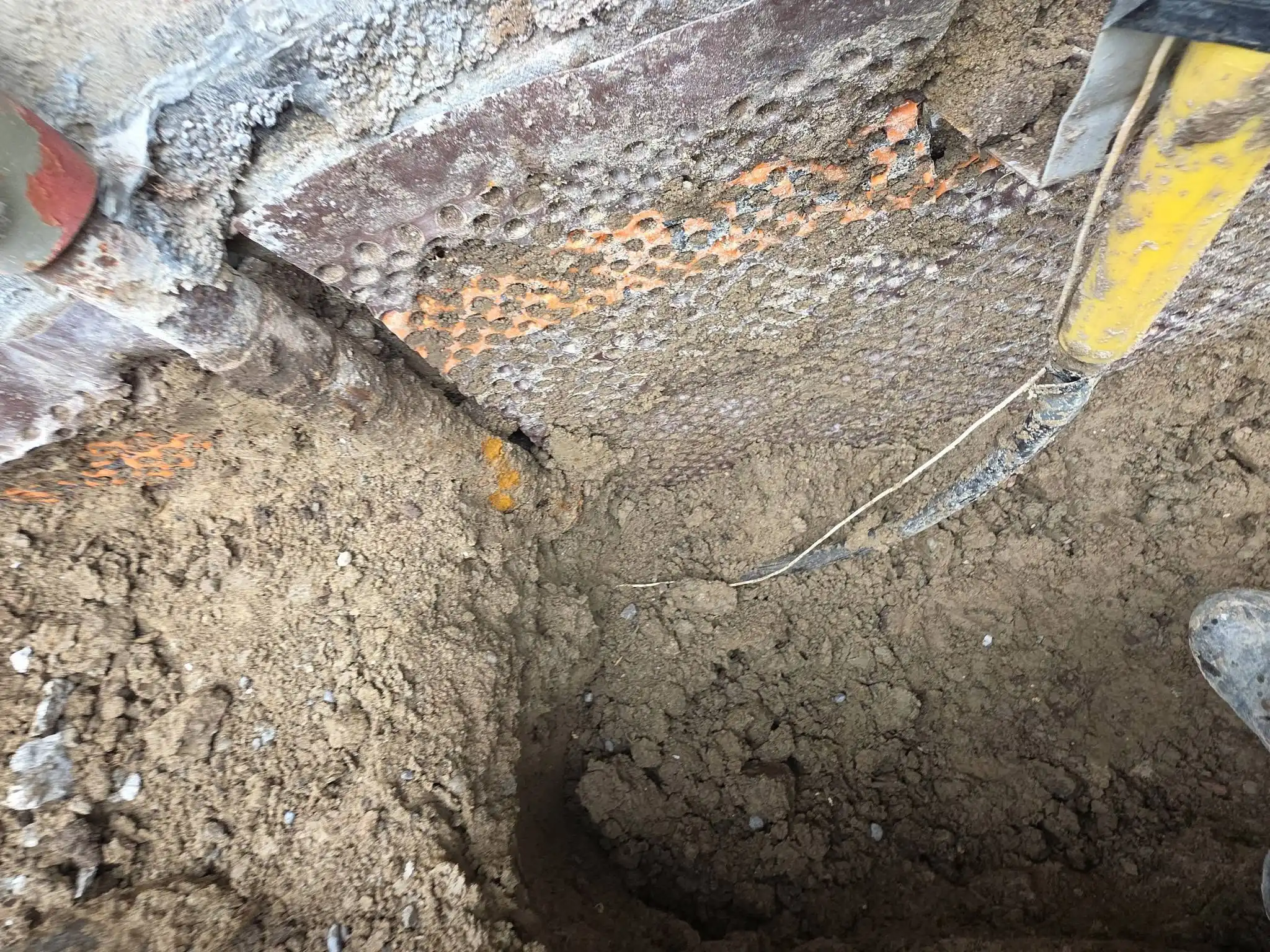
Foundation repair covers everything from injecting a single leaking crack to stabilising a wall that is genuinely moving - and the distance between those two jobs, in cost and in seriousness, is enormous.
Most foundation cracks in Toronto homes are cosmetic shrinkage cracks and are sealed by injection at $450 to $1,100 per crack. Horizontal cracks, stair-step cracking through block mortar, and any crack wider than about 6 mm or displaced out of plane indicate structural movement and require a structural engineer before any repair is chosen.
Reading a crack
Three things tell you most of what you need: direction, width, and whether it is still moving.
Vertical and hairline usually means concrete shrinkage as the wall cured, often within the first year of the house's life. Extremely common, structurally irrelevant, and a nuisance only when it leaks.
Diagonal cracks radiating from a window or door corner are stress concentration at an opening. Usually benign, sometimes an early settlement signal.
Horizontal cracks are the ones to take seriously. A horizontal crack partway up a foundation wall generally indicates lateral pressure from saturated soil pushing the wall inward. That is a structural condition and it can progress.
Stair-step cracking following mortar joints through block is differential settlement - one part of the foundation moving relative to another.
Full detail on assessing and repairing each type is on foundation crack repair in Toronto.
Why Toronto soils do this
Much of this city sits on clay. Clay expands when it takes on water and shrinks when it dries, and it does that seasonally, every year, for the life of the building.
That cycle is why so many Toronto foundations show hairline cracking that opens slightly in one season and closes in another. It is also why drainage and foundation stability are the same subject: keeping moisture around the foundation stable is what stops the soil cycling.
A foundation repair that ignores drainage is a repair that will be needed again. Which is why crack work and basement waterproofing are usually priced together rather than separately.
When the fix is structural
Where a wall is displaced, bowing, or settling actively, sealing achieves nothing. The options then are carbon fibre or steel reinforcement to stop a bowing wall moving further, underpinning to take the foundation down to competent bearing, or helical piles at $1,200 to $2,000 per pilewhere the soil beneath simply cannot carry the load.
All of those need stamped engineering and a City of Toronto building permit. The underpinning technique itself, which is also used to gain ceiling height, is covered on basement underpinning in Toronto.
Crawl spaces
Older Toronto houses and rear additions frequently sit over crawl spaces with exposed earth floors, no vapour barrier and no insulation.
Moisture evaporating from that soil rises into the house continuously, which shows up as damp, musty air and cold floors above. Encapsulation seals the space with a heavy vapour barrier and insulates it - see crawl space encapsulation.
What it costs
| Work | Toronto 2026 range |
|---|---|
| Crack injection, per crack | $450 to $1,100 per crack |
| Exterior repair at one wall, per linear foot | $150 to $300 per linear foot |
| Underpinning, per linear foot | $350 to $800 per linear foot |
| Helical piles, per pile | $1,200 to $2,000 per pile |
| Structural engineering and drawings | $3,500 to $8,000 |
Where a crack is leaking rather than moving, the cheaper path is usually basement leak repair, which starts by locating the entry point rather than assuming a system is needed.